

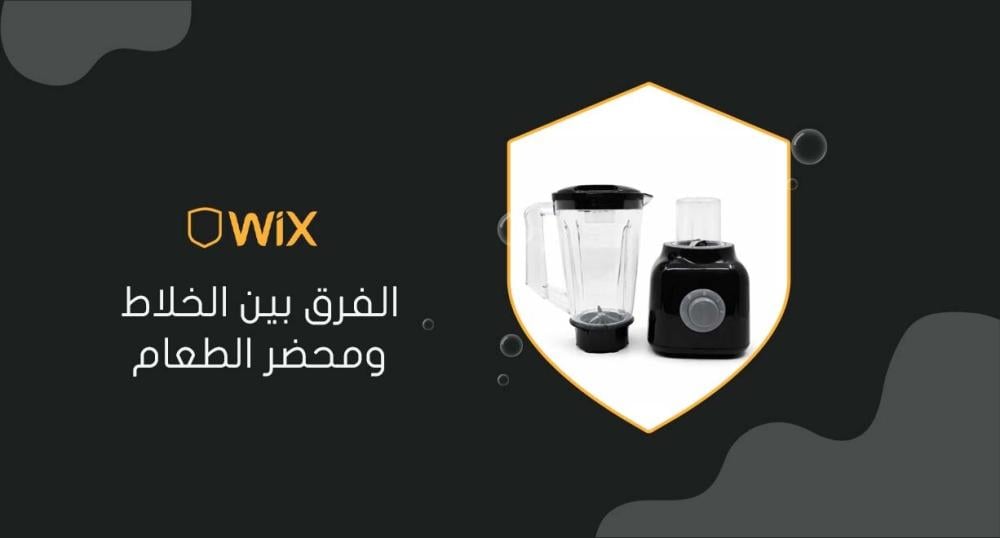
Both the blender and the food processor are essential tools in every modern kitchen, but they serve different purposes and each has specific capabilities that facilitate food preparation in various ways. Knowing the difference between them helps you choose the right appliance for your daily needs, whether for preparing juices and drinks or for quickly and efficiently chopping and mixing different ingredients. In this article, we will learn about the difference between the blender and the food processor by presenting each appliance, its functions, features, and the best uses for each to facilitate your work in the kitchen.
The difference between a blender and a food processor
Choosing the right appliance between a blender and a food processor is an important step to achieving optimal performance in the kitchen. Each is designed for different functions to suit various needs. Despite their basic similarity, the difference between them becomes clear when using them and in the nature of the tasks that each appliance excels at performing. Below, we explain the difference between a blender and a food processor:
First: The blender:
1. Accessories:
- It usually contains a single blade fixed to the base of the bowl.
- The blade works at multiple angles to chop and blend ingredients, but it is smaller and less sharp than food processor blades.
- The blade is not normally removable.
2. Engine and speeds:
- The motor has a power of up to 1470 watts, which is powerful enough to turn the ingredients into a very smooth mixture.
- Equipped with several speeds that can be adjusted according to the type of ingredients and the nature of the recipe.
3. Shape and size:
- A narrow, elongated jug.
- The blade design allows the ingredients to be moved downwards during mixing in a swirling motion.
- The blender jug needs an appropriate amount of liquid to ensure smooth movement without spillage.
4. Foods that can be prepared:
- Juices and cocktails.
- Protein shakes.
- Soups and sauces.
- Pureed baby food.
- Iced drinks with liquid in them.
- Hot drinks such as coffee and milk.
- Custard or pudding.
Second: Food processor:
1. Accessories:
- It comes with several interchangeable blades and discs:
- Blades for crushing ingredients.
- A blade for chopping and slicing.
- A blade for grinding dry ingredients such as spices and grains.
2. Engine and speeds:
- The motor power ranges from 600 watts to 1300 watts.
- Equipped with different speeds that can be selected via buttons according to the components and the nature of the task.
3. Shape and size:
- A larger and wider bowl than a blender jug.
- It usually contains two blades at different heights:
- One top one for cutting.
- One lower one for scraping the ingredients and ensuring they are ground completely.
- Some devices come equipped with a built-in blender, combining the two devices into one.
4. Foods that can be prepared:
- Chopped vegetables for salads.
- Minced meat.
- Chickpeas and grated cheese.
- Dry ingredients such as crushed biscuits, breadcrumbs, and spices.
- Dough of all kinds.
- The cake mix allows air to enter, resulting in a firm and good-quality bread.
Wicks Multifunctional Food Processor
The Wicks multi-functional food processor comes to give you an easy and distinctive experience in the kitchen. It combines power, durability, and versatility. It is designed to be your first assistant in preparing various foods thanks to its multiple functions and high quality, in addition to its modern design that suits every kitchen, with powerful performance that guarantees perfect results every time.
Advantages of the Wicks multi-functional food processor:
- Waterproof and shatterproof to provide you with safe use and a longer device lifespan.
- It operates with 7×1 multi-function technology, making it suitable for preparing different types of meals.
- Equipped with a full range of accessories including:
- Main blender cup.
- A cup for grinding.
- A filter for purification and separation.
- 2 cups for sauces to quickly prepare dressings.
- A cup for chopping vegetables and various ingredients.
- A stirring stick made of stainless steel.
- It comes with a modern and elegant design that suits the decor of a modern kitchen.
- The 2000ml capacity of the bowl helps in preparing large quantities easily.
- Equipped with a non-slip rubber base to ensure the mixer remains stable during operation.
- It relies on a 600W operating power supply, providing sufficient power to accomplish various tasks.
Order the Wicks multi-functional food processor now and enjoy powerful performance that saves you time and effort and gives you an easier and more professional kitchen experience with every use.

How do I choose between a blender and a food processor?
When preparing basic kitchen tools, many may find it difficult to choose between a blender and a food processor. Each offers important functions that facilitate the preparation of daily recipes. Although both rely on a motor and blades to process food, each device has a different nature of use that makes it suitable for specific recipes and needs. Therefore, understanding the basic differences helps you choose the optimal device for your kitchen according to your daily use.
- Choose a blender if your use often involves liquid ingredients such as smoothies, soups, sauces, and shakes.
- Choose a food processor if you need to handle solid ingredients such as chopping, slicing, grating, and dry grinding.
- If you want to prepare perfectly smooth drinks without any lumps, a blender is best because of its high ability to liquefy ingredients.
- If your goal is to prepare dough or mix large quantities of dry and wet ingredients, a food processor is the best option.
- The blender is suitable for you if you need a smaller device with less capacity and is easy to store.
- A food processor is an excellent choice if you prepare multiple recipes and various tasks thanks to its many attachments.
- If your kitchen space is limited and you need one versatile appliance, choose a food processor as it offers more functions.
- For those interested in preparing salads and appetizers quickly, the food processor offers efficient chopping, grating, and mincing.
- If your priorities in the kitchen are towards drinks and liquid mixtures, then a blender is the most suitable appliance.
- Your budget determines the choice: a blender is often less expensive, while a food processor offers greater versatility for a higher price.
Tips for maintaining your blender and food processor
Regular maintenance of the blender and food processor contributes to extending the life of the two appliances and improving their performance over time. It also ensures maintaining a level of hygiene and health safety during food preparation. This includes a set of simple procedures that are carried out regularly to keep them clean and protect the internal parts from damage.
- Clean the parts immediately after use: Disassemble the appliance bowl and blades and wash them with warm soapy water to remove food residue before drying.
- Use a clean brush when needed: It is advisable to use a soft brush to reach tight spaces and crevices around the blades to remove any stuck food residue.
- Dry the parts thoroughly before reassembling: Make sure all parts are completely dry before reassembling to avoid rust or mold.
- Do not immerse the electrical base in water: The electrical part should only be wiped with a damp cloth, avoiding water from reaching the motor or electrical parts. The Wicks multi-functional food processor is designed with fully waterproof technology and can be safely immersed in water without worrying about damage to the electrical parts.
- Avoid overloading: Do not fill the container beyond the recommended limit or operate the appliance with very heavy loads all at once to reduce stress on the motor.
- Check blades and seals periodically: Check the condition of the blades and seals in the food processor and blender to ensure they are working properly and replace any damaged parts when necessary.
- Storing the devices in a suitable place: Keep the two devices in a clean and dry place, making sure to dry the parts before storage to prevent moisture and contamination.
- Follow the manufacturer's instructions: Read the user manual to achieve optimal performance and maintenance according to the company's recommendations for a specific device.
The most frequently asked questions about the difference between a blender and a food processor
1. What is the main difference between a blender and a food processor?
A blender is designed to handle liquid ingredients and turn them into a smooth consistency, while a food processor is used to process solid ingredients such as chopping, grating, and kneading.
2. Which is better for juices and soups?
The blender is best, because it is able to achieve a very smooth and soft consistency without lumps, especially with liquids.
3. Can a blender replace a food processor?
A blender cannot perform tasks such as chopping, grating, kneading, or mincing large quantities of solid foods, which are essential functions of a food processor.
4. Can a food processor replace a blender?
A food processor can prepare what a blender prepares, because it has a part that is exactly like a blender.
5. Which is better for the dough?
A food processor is the best option because it is equipped with blades and beaters specifically for heavy kneading and mixing.
In conclusion, we have explained the difference between a blender and a food processor, highlighting the most prominent uses of each and when choosing between them is appropriate, which helps in making a more accurate purchase decision according to daily needs in the kitchen.
Topics that might interest you: